Meeting with MP Saroya and Visiting the Legislative Assembly of Ontario
On March 6, 2019, the Canada Gansu Federation of Chamber of Commerce was invited to visit MP Bob Saroya, a member of Parliament and the Legislative Assembly of Ontario.
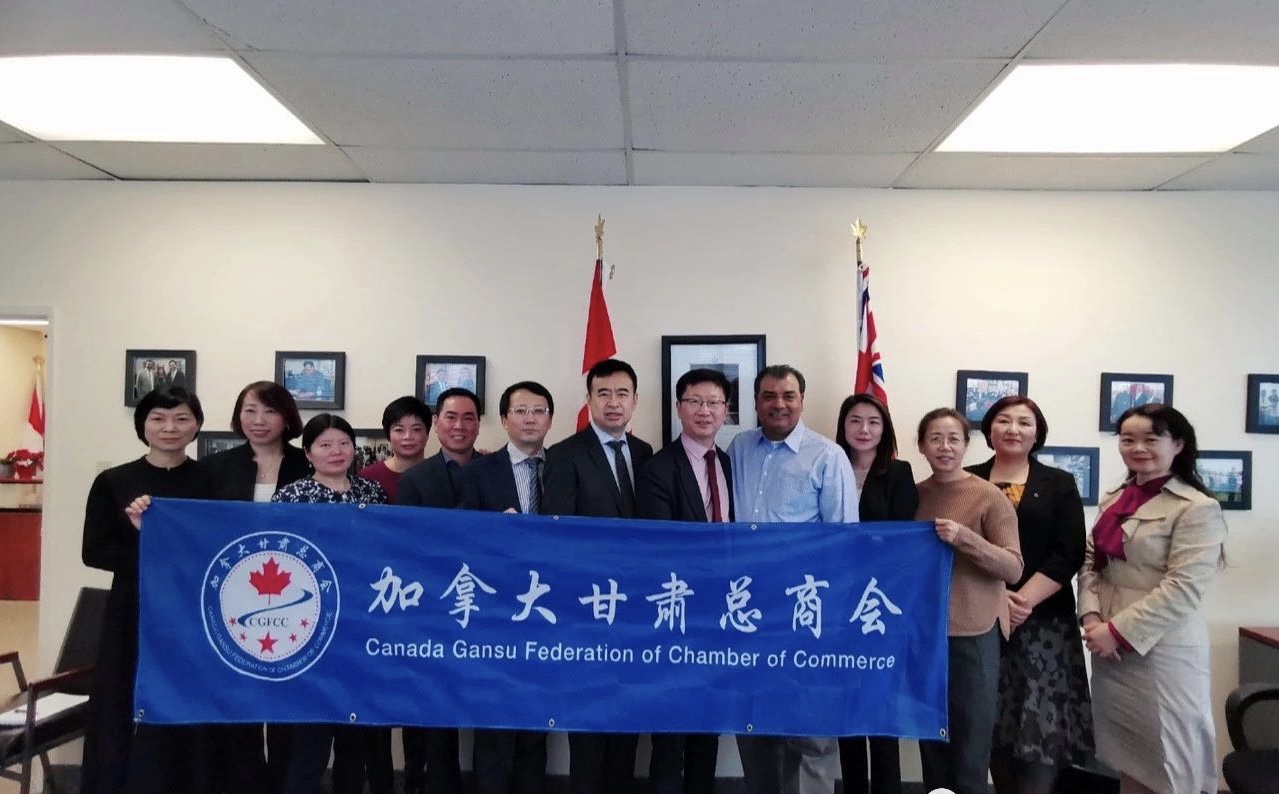
First from left to seventh from left: Qiongying Song, Xiaochun Guo, Susan, Dongmei Wei, Yuming Chen, Jiaqing Zhu, Jianqiang Zhu
From right to right: Hui Zhao, Xiaoning Wang, Wei Deng, Wanzhuo Nan, Member of Parliament Bob Saroya, President Zhaoan Sui
At 9:30 in the morning, we arrived at the office of MP Bob Saroya. This is the second visit. On April 13, 2018, I was talking to Bob in the same place. Familiar scenes, friendly atmosphere, just like meeting old friends in the neighborhood.
Mr. Saroya is of Indian background and has a lot of affection for China. He visited China in April 2018. He began to learn about the Sino-Japanese War during his middle school history class. At the Nanjing Massacre Memorial Hall, Mr. Saroya learned about the disaster and pain the Chinese people suffered during the war. He said, "Keep history in mind and don't let history repeat itself".
Mr. Saroya talked about Canadian politics. Canada has a vast territory with an area of more than 9.9 million square kilometers. With a population of about 37 million, it is a small country in terms of population. He said that Canada's taxpayer population is only about 12 million. In other words, it is the hard work of one third of the people to support the operation of the entire Canadian country, support the elderly, children, refugees and all public welfare undertakings. Canadian taxes are relatively heavy compared to other countries in the world.
Mr. Saroya talked about the huge budget deficit of the current government and the increasing burden of taxpayers. The refugee policy is quite controversial. One of the important concepts of the Conservative government is to reduce taxes, support and protect private enterprises. Only when the real economy is fully developed can more wealth and employment opportunities be created.
The 2019 Canadian general election is coming soon. Mr. Saroya talked about Mr. Andrew Sheer, the current leader of the Conservative Party, who has outstanding leadership skills and charisma, and he is confident of winning the federal election in October this year.
Mr. Saroya once again invited President Sui and members of the Chamber of Commerce to hear politics on Parliament Hill in Ottawa, and participate more in support of the Canadian election in 2019.
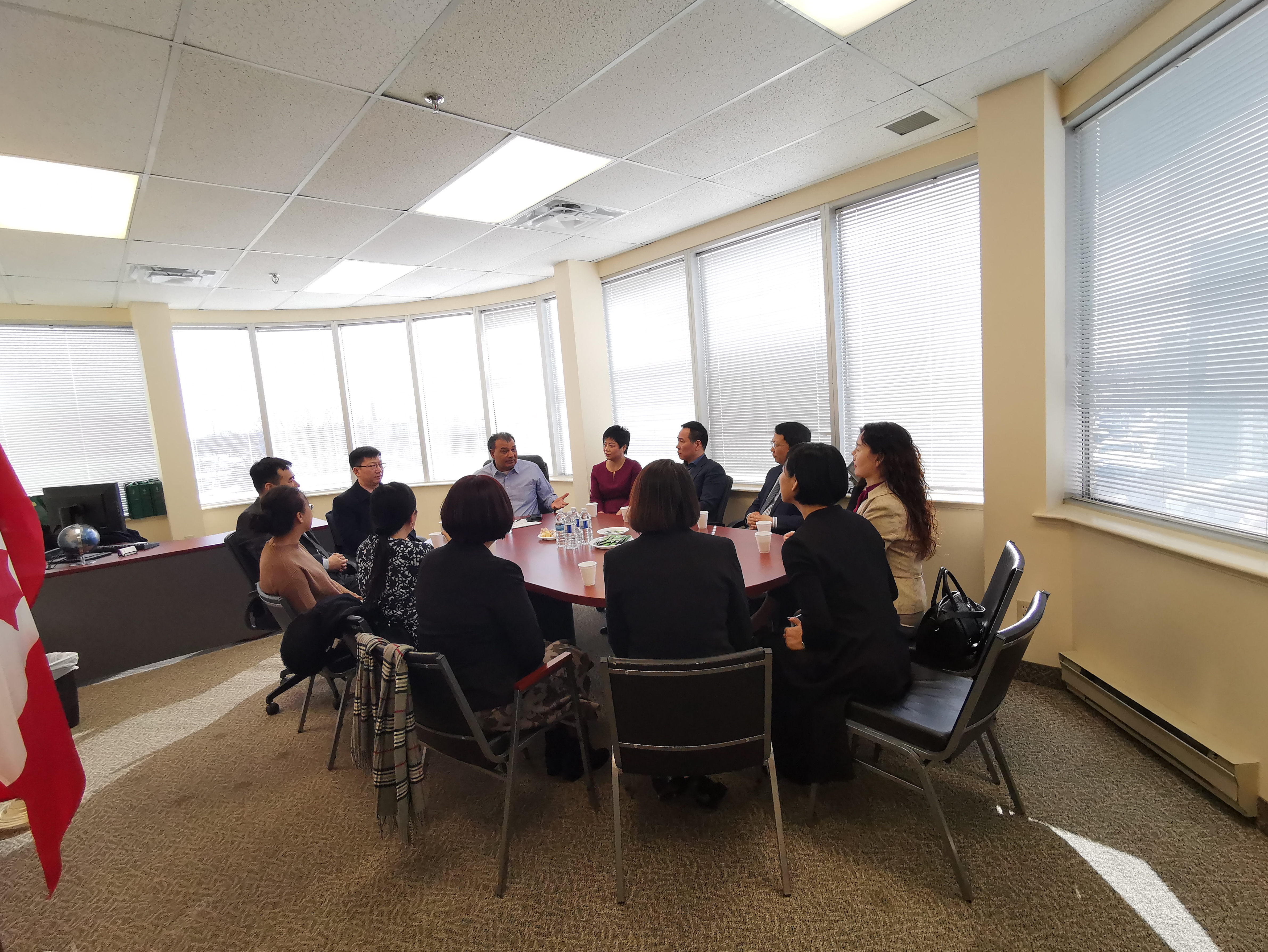
Member of Parliament Mr. Saroya and members of the Chamber of Commerce had a cordial exchange
President Zhaoan Sui introduced to Mr. Saroya the cooperation and achievements of Gansu and Canada in the fields of mining, technology, education and real estate in recent years, and is looking forward to a broader development prospect in the future.
President Zhaoan Sui specially invited Mr. Saroya to visit Gansu. Mr. Saroya gladly accepted the invitation. He said that Mr. Andrew Sheer has plans to visit seven provinces in China and will try to visit Gansu. In his view, only by deepening understanding can we better promote political and business exchanges between Canada and China.
Vice President Dongmei Wei has been a strong supporter of community activities for many years. In 2015, two large-scale events were held at her home to support Ms. Bin Chang in running for Member of Parliament. The previous Minister of National Defense Jason Kenney and Minister of Immigration Chris Alexander visited Dongmei's home, accompanied by Mr. Saroya. Over the years, Mr. Saroya still clearly remembers the conversation between the guests and the host.
After the meeting, Mr. Saroya happily took a group photo with members of the Chamber of Commerce.
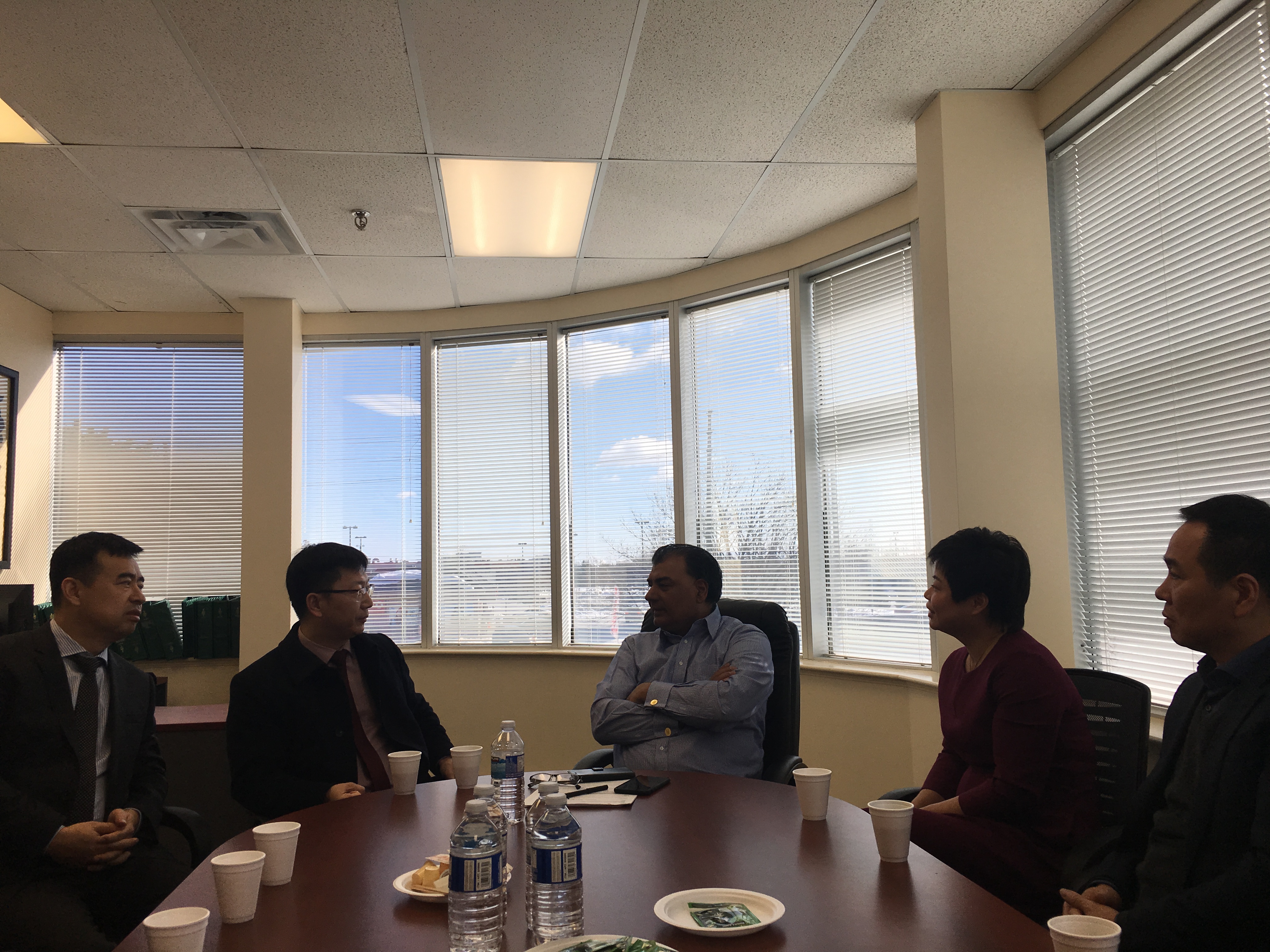
President Zhaoan Sui introduced Gansu to Mr. Saroya
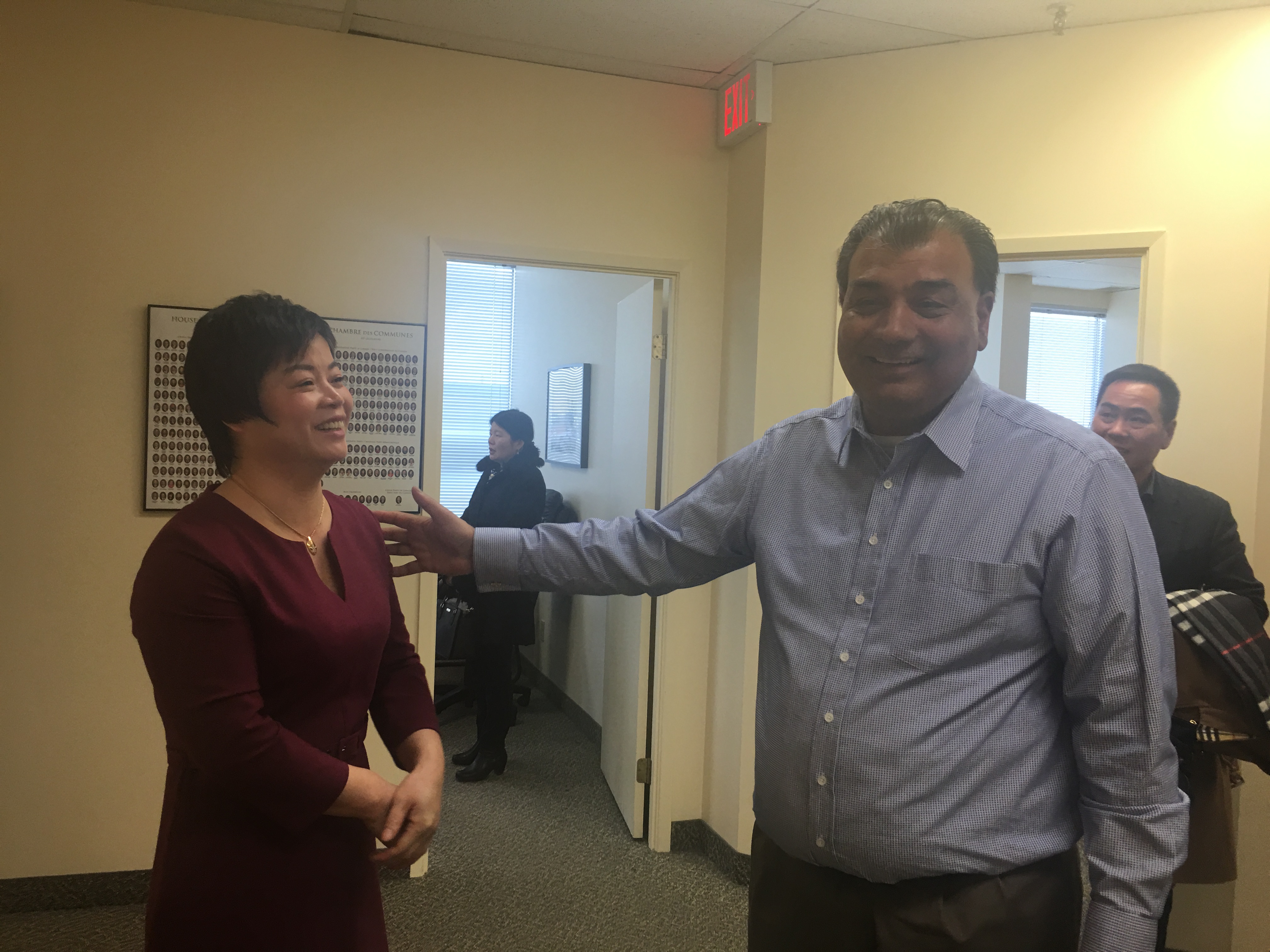
Vice President Dongmei Wei invited Mr. Saroya to visit her house
Leaving Bob's office, we headed to the Ontario Legislative Building. MPP Vincent Ke is participating in the legislative discussion in the legislative hall and arranged for his assistant Mr. Noah to guide us.
Ontario Legislative Building was built in 1893 and is located in Queens Park in downtown Toronto. The land belongs to the University of Toronto, and the provincial government pays "1" Canadian dollars each year for a period of 999 years.
The Ontario Parliament Building is a Romanesque building made of brown sandstone, known as the "Pink Palace". The five-story building is simple, elegant and majestic.
Three flags were flying on the outer wall in front of the building. The Canadian flag is in the middle, red and white, the white in the middle represents the vast territory, the red on both sides represents the Atlantic and Pacific, and the red maple leaf symbolizes the hardworking Canadian people. On the left is the provincial flag of Ontario, with a red background, the upper left is a rice-shaped symbol of the Commonwealth, the center on the right is the provincial emblem, the upper is the English flag with a red cross on a white background, and the lower is the three maple leaf pattern on a green background. The green flag is the Ontario Legislative Council flag.
The interior of the Provincial Assembly Building is antique, with distinctive carvings and murals. There are portraits of Queen Victoria and Canadian celebrities on the promenade, as well as Canadian art works of the 19th and 20th centuries. Historical relics and historical documents are displayed on the first floor of the building.
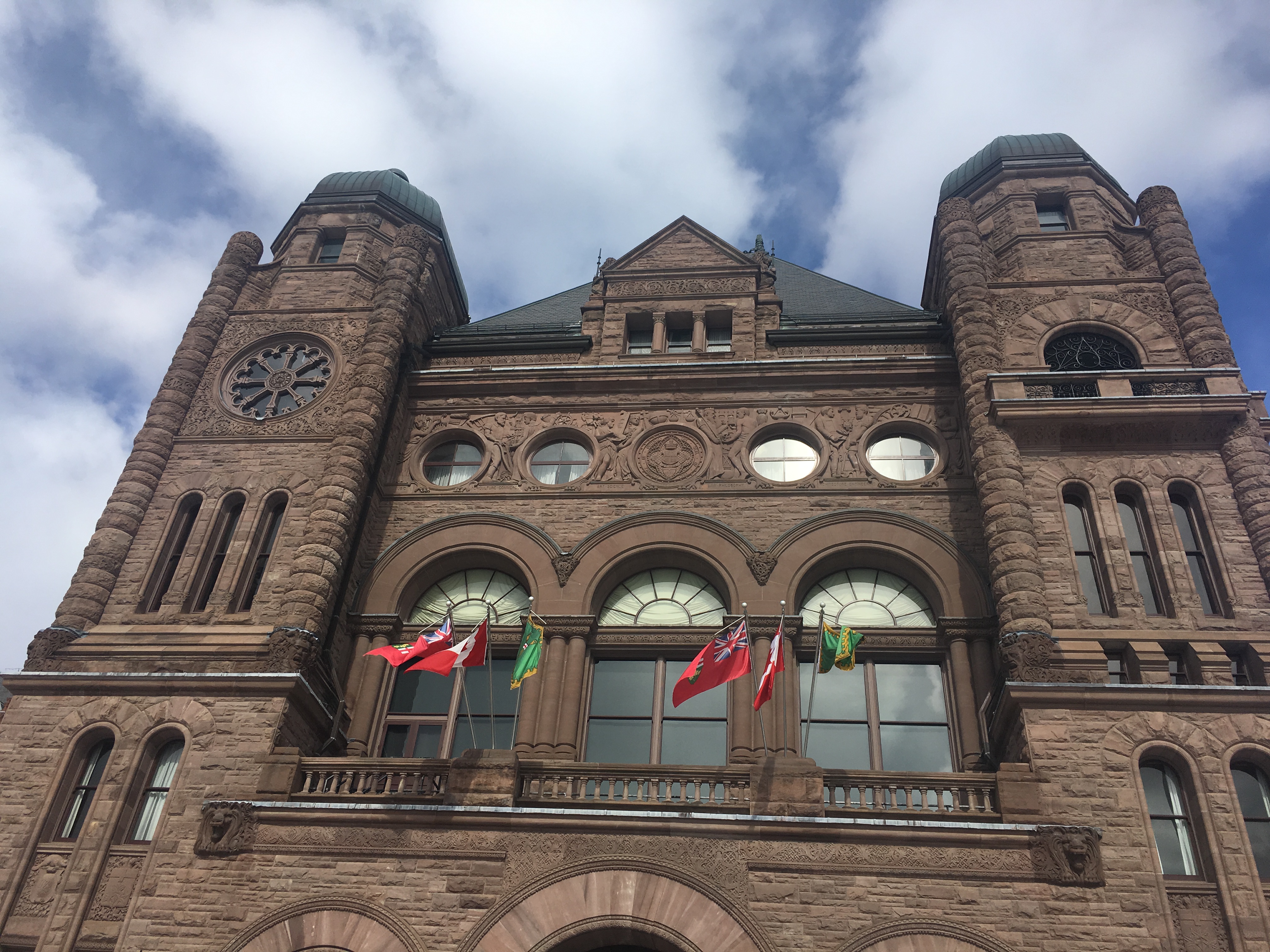
Ontario Legislative Building
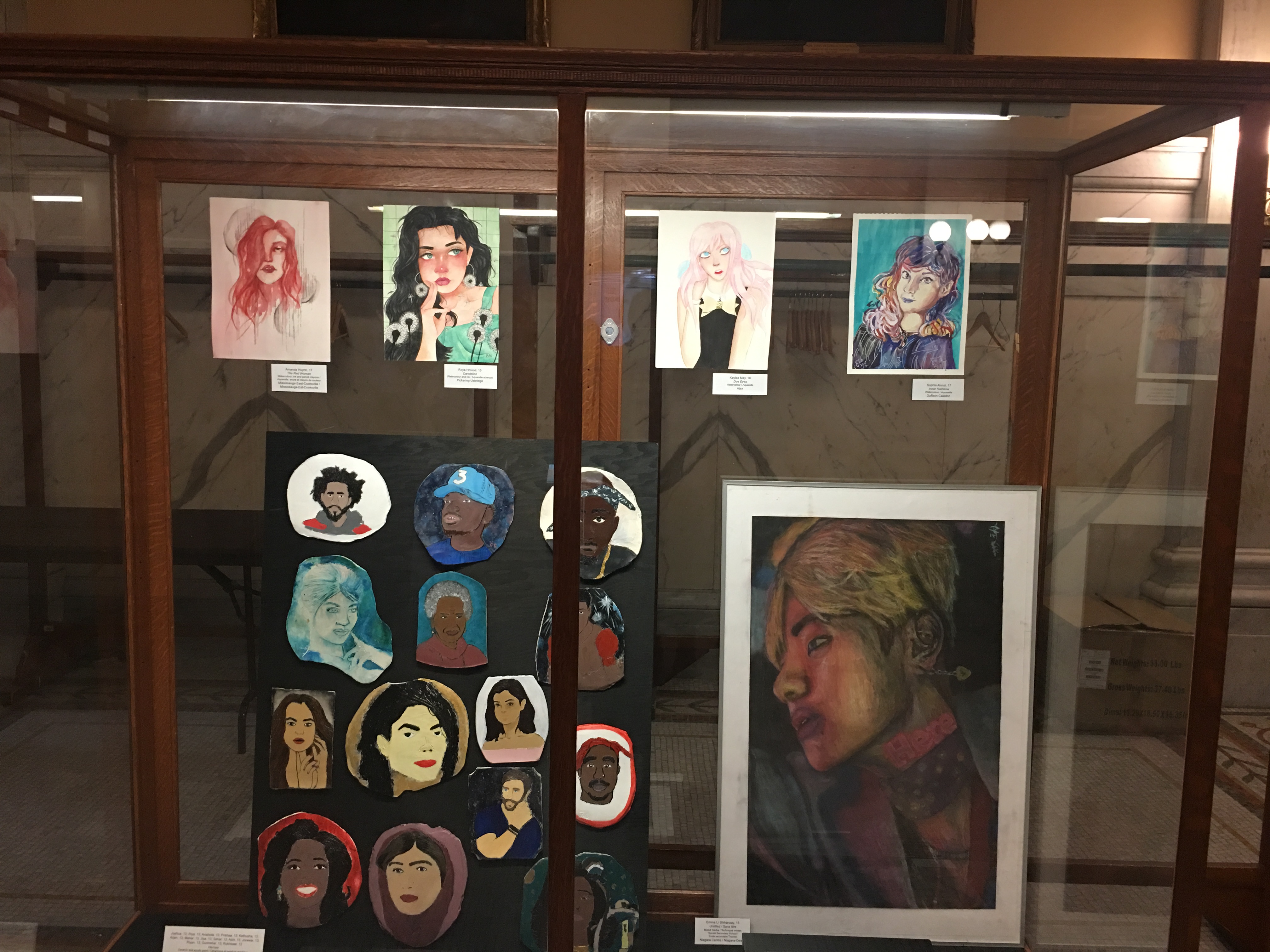
Building interior artwork
The Ontario Parliament Building is the office of the Lieutenant governor, Premier and Members of Provincial Parliament. It is the highest administrative organizaiton of the provincial government and the seat of the Ontario Parliament.
There are five cuboid wooden boxes in the Legislative Chamber, marking the whole process of legislation: Ideas, Explained, Debated, Voted On, Law. The functions of the three important figures in the debate are described in pictures and texts on the wall. The Speaker presides over the debate, Clerk counts the votes, and Sergeant-at-Arms maintains the order of the debate. During the debate, they put on black robes and hats matching their identities. The Speaker of the House has the ruling party on the right and the opposition party on the left.
The debate in the Legislative Chamber on March 6 included: Bill 66-Restoring Ontario's Competitiveness and Bill 74-Patient's Healthcare Act.
When we arrived, the Legislative Chamber was conducting Oral Questions. The whole process was orderly and solemn.
There were a lot of questions that day. There are government accountability, housing policy, Autism treatment, Tuition, Indigenous health care, Hospital funding, Issues such as Northern economy and Pay equality.
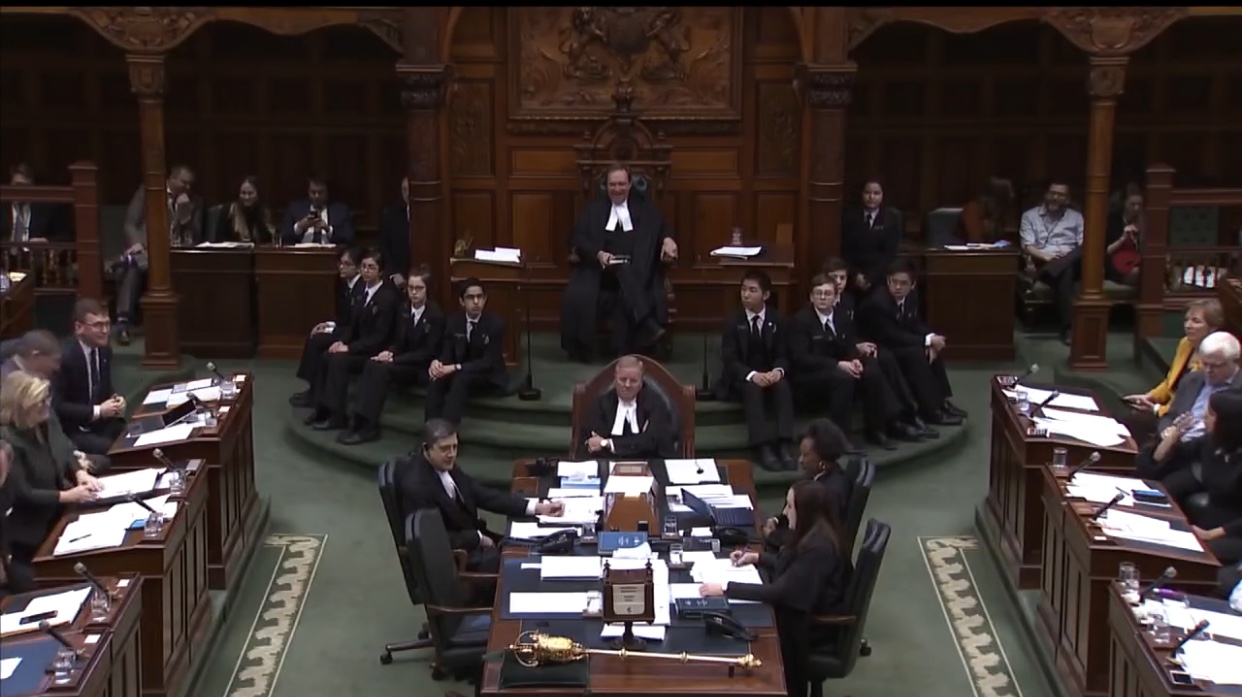
March 6 Legislative Chamber
In the question of tuition, the MPP Vijay Thanigasalam asked: During the years of the previous provincial government, university tuition has been increasing and the burden on the family has become heavier. Since 2006, tuition fees have increased from an average of $5,000 to $9,000 per year. When the current provincial government was elected, it promised to put more money in the pockets of residents. What measures will the provincial government take in terms of university tuition?
Hon. Merrilee Fullerton, Minister of Training, Colleges, and Universities, replied: Thank you very much to the MPP from Scarborough for appealing to Ontario students and families. Mr. Speaker, the Ontario government has announced a 10% reduction in tuition fees and a university grant program. The "student choice" project will also effectively reduce unnecessary costs.
Vijay Thanigasalam said that the provincial government had done nothing to curb the increase in tuition fees. He asked how much tuition can be reduced or exempted by students in his electoral district under the current policy?
The director continued to answer. Centennial College public relations management students can save $670 next year. Senaca College aviation majors can reduce tuition by $1230 next year. Students majoring in management with a two-year MBA at the University of Toronto can save $5340.
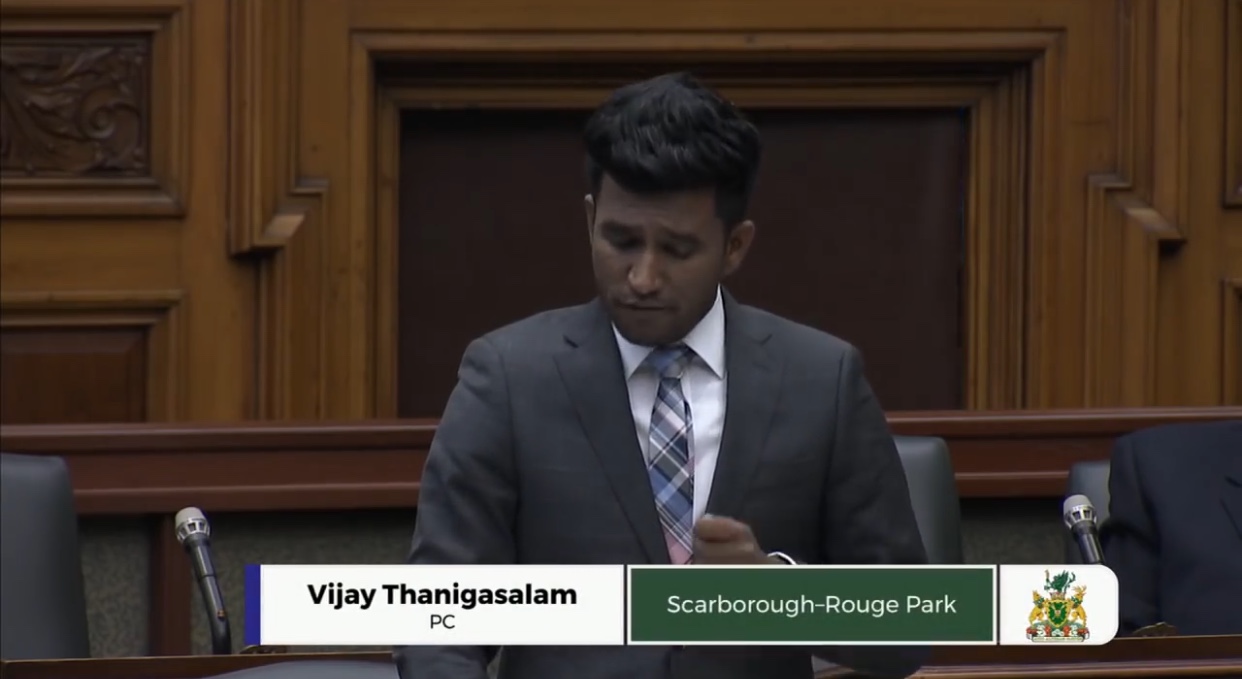
Question from MPP Vijay Thanigasalam
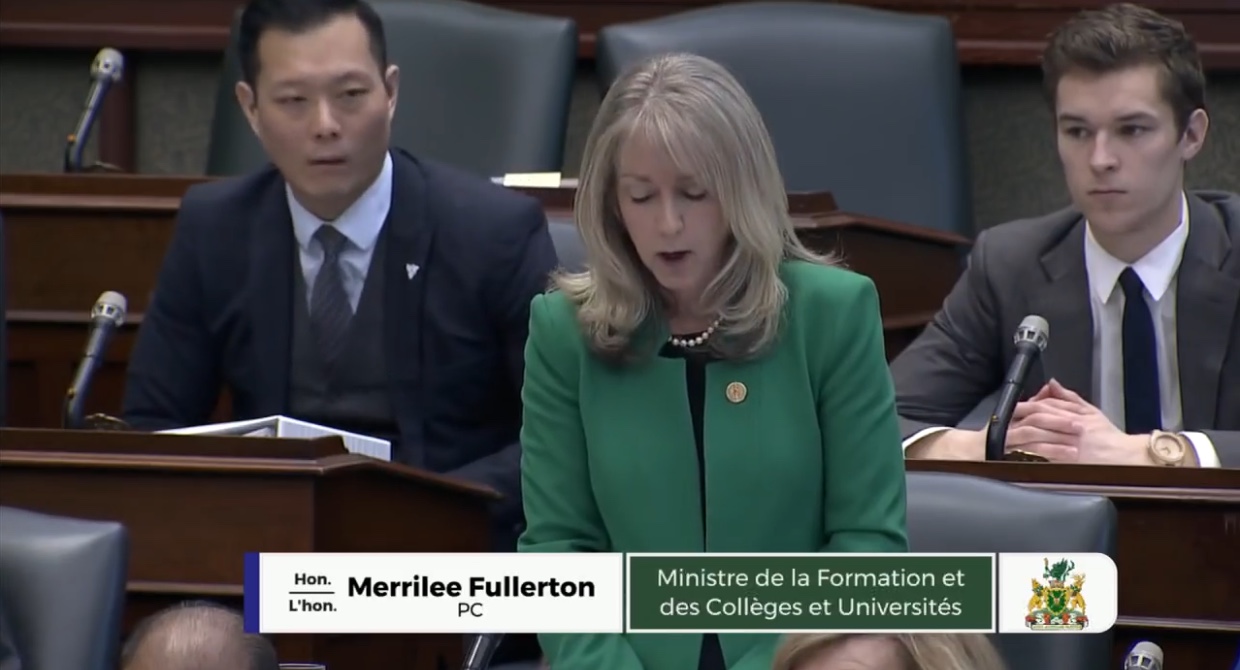
Hon. Merrilee Fullerton, Minister of Training, Colleges, and Universities answers questions
MPP Jim Wilson raised the issue of hospital funding. He talked about the Stevenson Memorial Hospital in his constituency, which was an emergency room built 50 years ago, when it was planned to receive 7,000 patients per year. And now it receives 40,000 patients every year, and this year it will be close to 50,000. In the next 13 years, the number of patients is estimated to increase by 37%.
MPP Jim Wilson said that the community had raised funds and invited the Deputy Premier and Minister of Health Hon. Christine Elliott to visit the hospital in person.
The minister replied: She has noticed that the community where MPP Jim Wilson is located is developing rapidly. Like many places in Ontario, hospitals are under tremendous pressure. The Provincial Department of Health has many requirements for hospital fund projects, and patient safety is the primary consideration. We must work hard to further improve medical conditions.
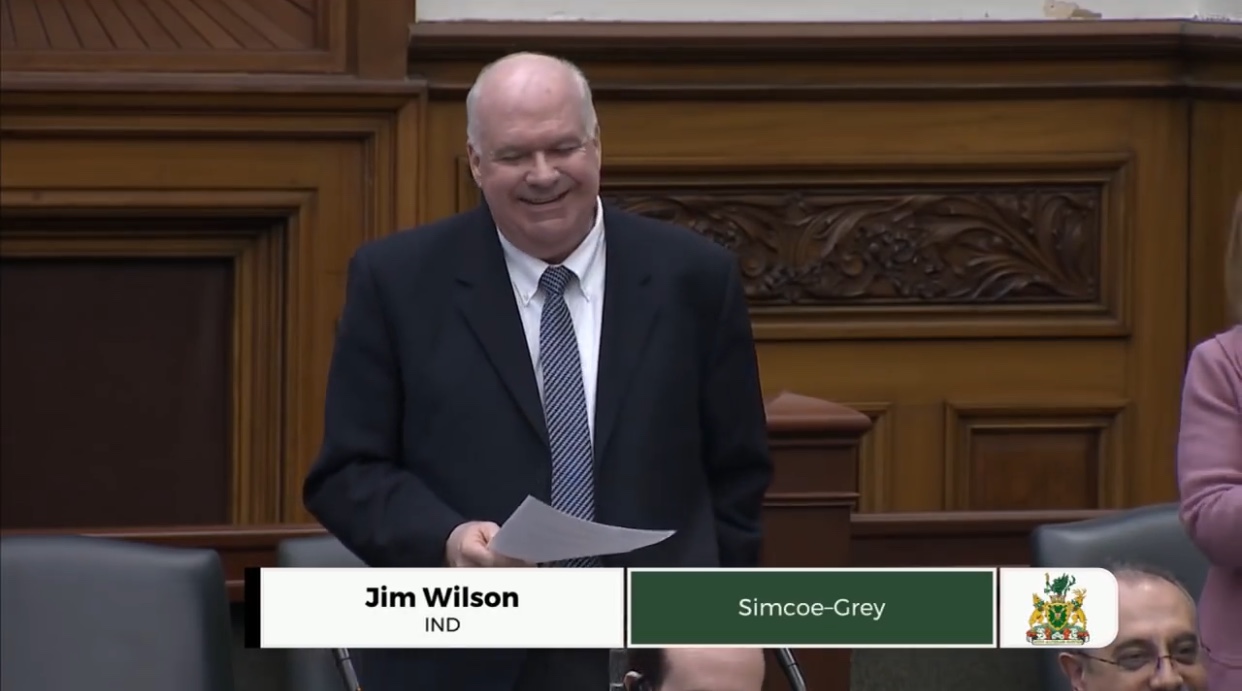
MPP Jim Wilson asked
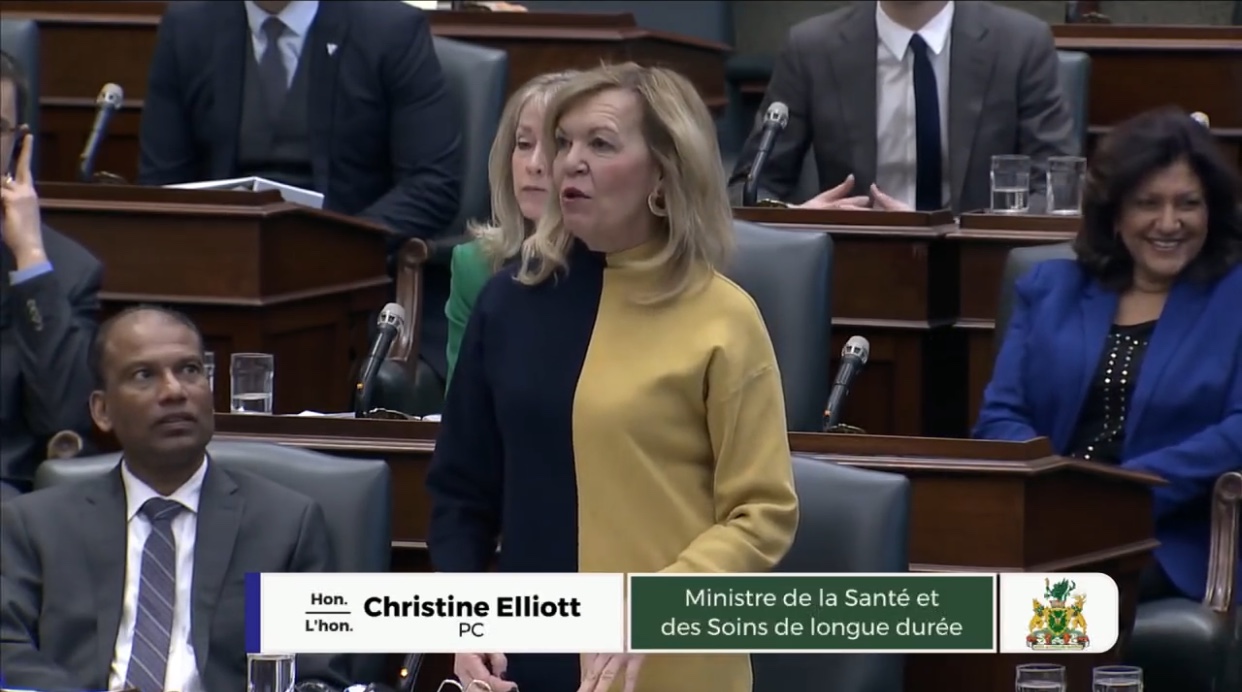
Reply by Hon. Christine Elliott, Deputy Premier and Minister of Health
In the question regarding Indigenous health care, it is the basic principle of the Provincial Legislative Council: This is an important plan for all Ontarians. Everyone deserves to be consulted.
During the questioning stage on March 6, we can see that members of different electoral districts are fighting for the legitimate rights and interests of the people of one party.
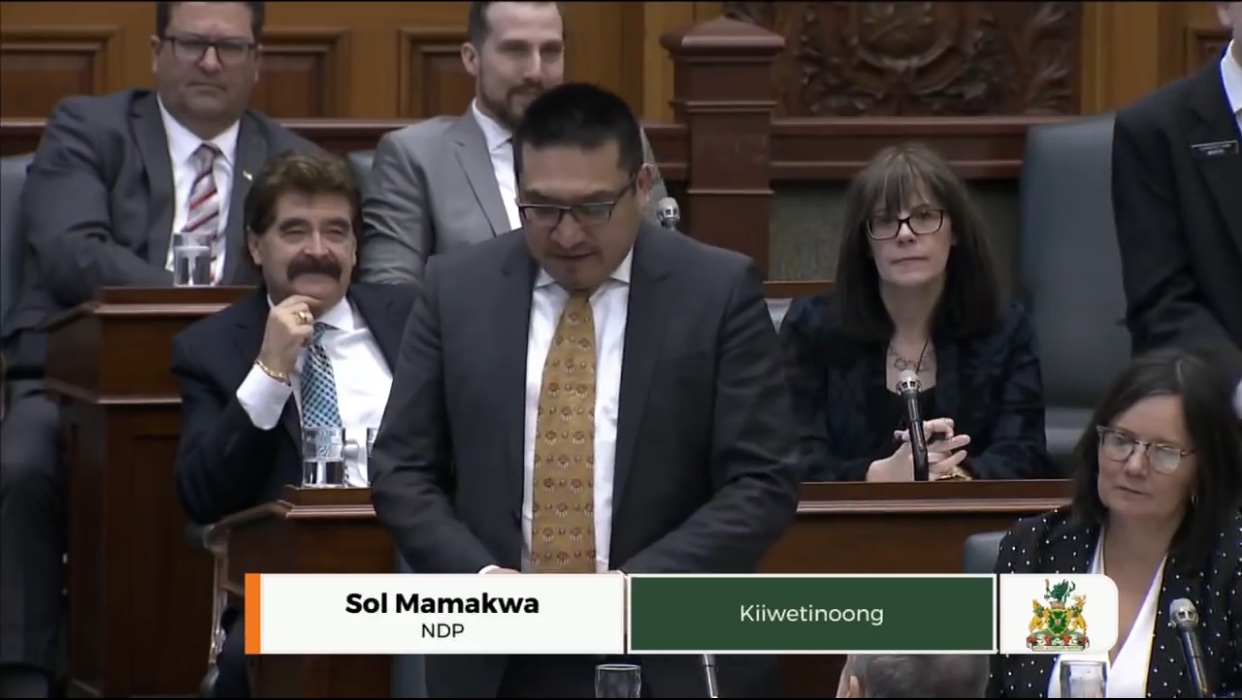
MPP Sol Mamakwa inquires about aboriginal medical policy
Just before the end of the legislative session, MPP Vincent Ke introduced the Canada Gansu Federation of Chamber of Commerce to all members. Members of Parliament stood up and applauded to extend a warm welcome to us.
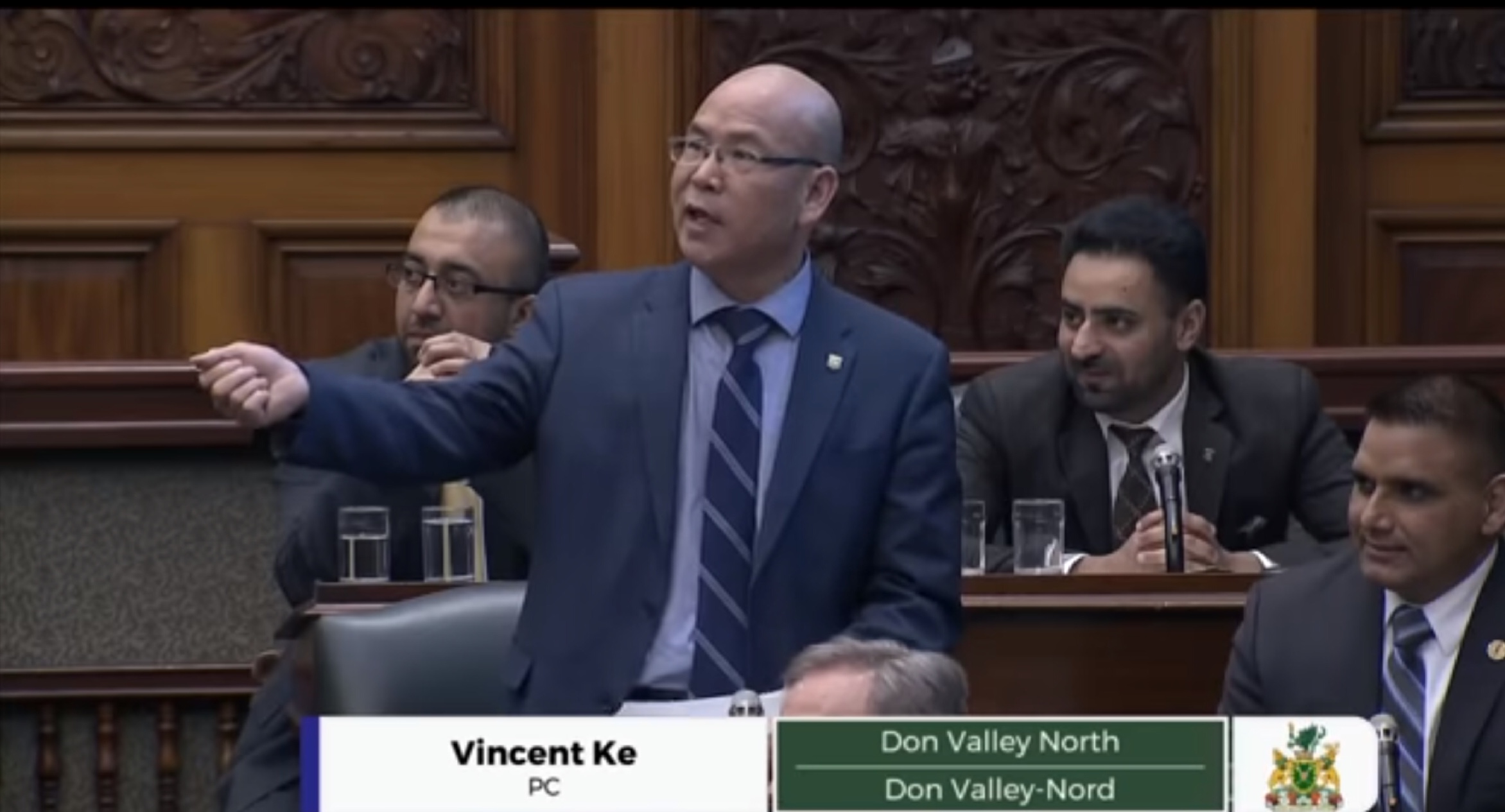
MPP Vincent Ke introduced the Canada Gansu Federation of Chamber of Commerce to the other MPPs
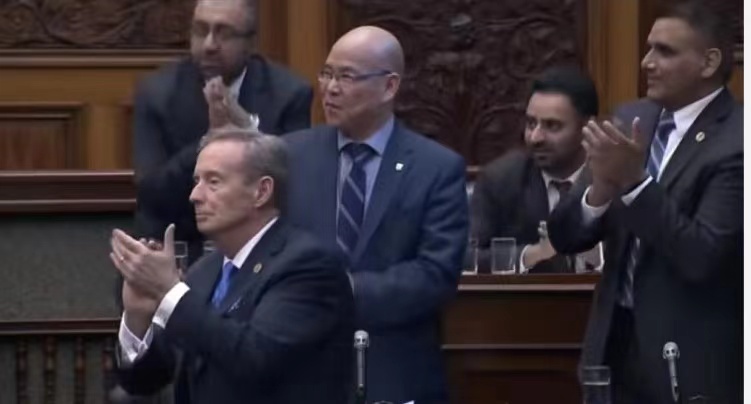
Members applauded and welcomed members of the Canada Gansu Federation of Chamber of Commerce
At the end of the visit, MPP Vincent Ke invited members of the Chamber of Commerce to have lunch in the Provincial Assembly Building's cafeteria. Lunch is very ordinary, simple and healthy.
Mr. Ke won the 2018 provincial election and is Ontario's first Chinese Member of Provincial Parliament with a mainland background. He studied in Germany and is currently the parliamentary assistant to the Minister of Heritage, Sport, Tourism and Culture Industries. I asked if Mr. Ke had the opportunity to be nominated as the minister, he replied that as a first-generation immigrant, language expression is very important. The minister often has to face various inquiries from parliamentarians and requires superb expression skills.
Everyone is proud of Mr. Ke's achievements. Mr. Ke said that in this position, it is much harder than originally thought, and he is truly a servant of the people. I asked when he would retire, he said he would do it until he can't work anymore. The answer was sincere and simple, and everyone nodded in admiration.
Selina, secretary general of the Chamber of Commerce, asked about the background of the staff in the legislative office who looked like middle school students. Mr. Ke said that they are middle school students in the seventh and eighth grades. They worked as a Page (parliamentary assistant) in the provincial assembly hall to help deliver documents. When they do volunteer work, they will gradually become familiar with the content and procedures of the legislation, which is an excellent learning opportunity. Middle school students can start applying in the sixth grade.
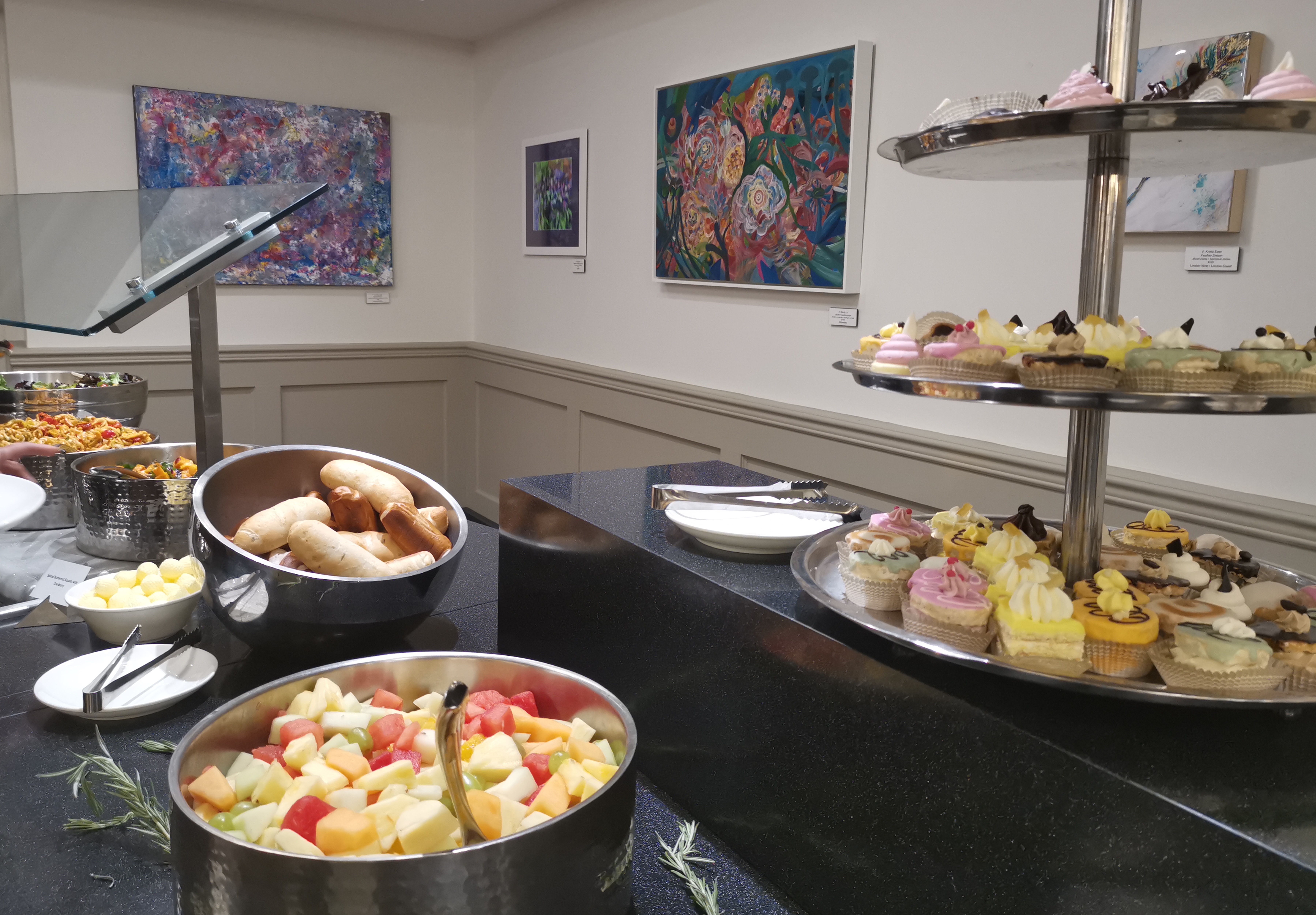
MPPs' lunch
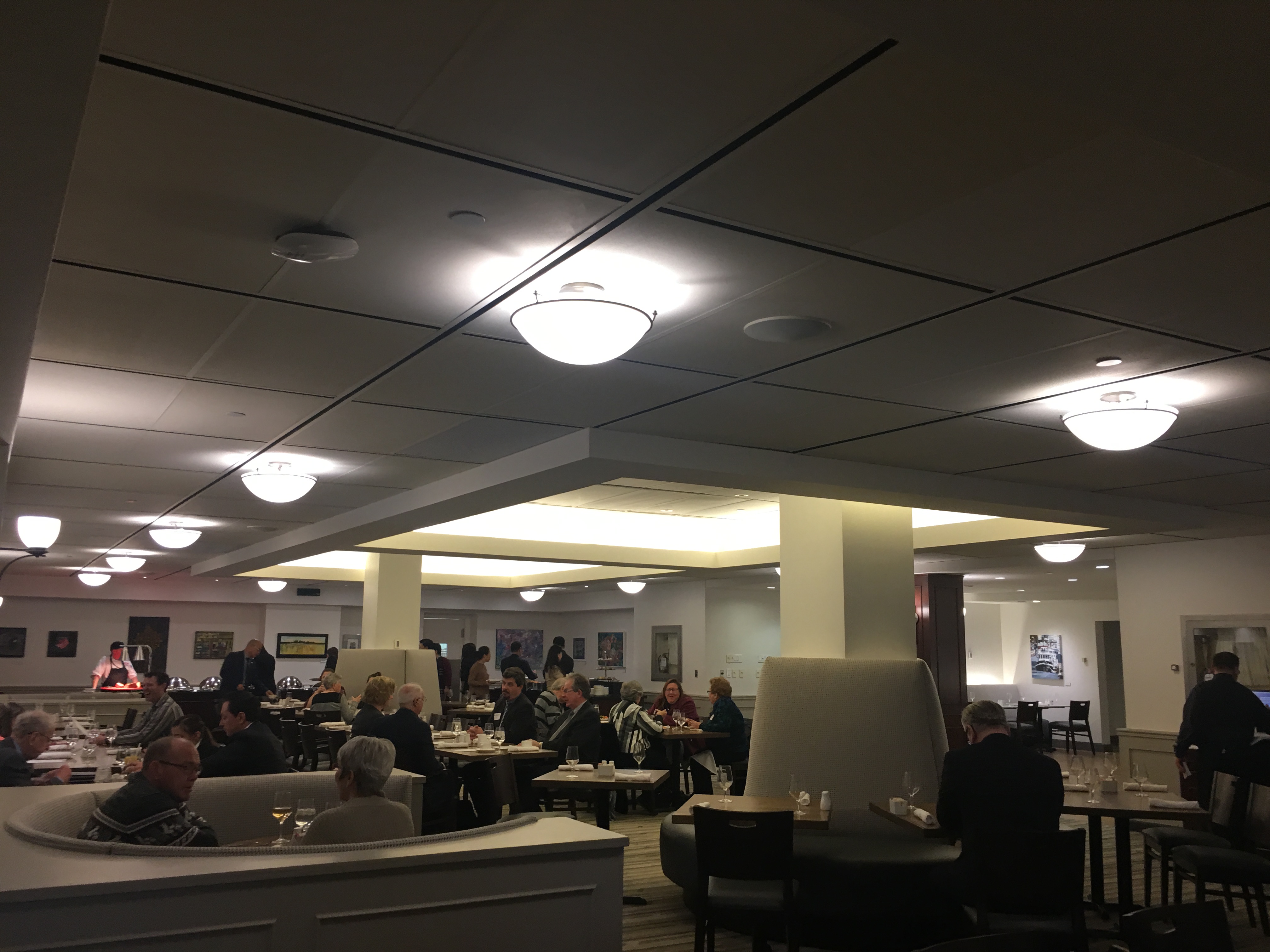
Cafeteria
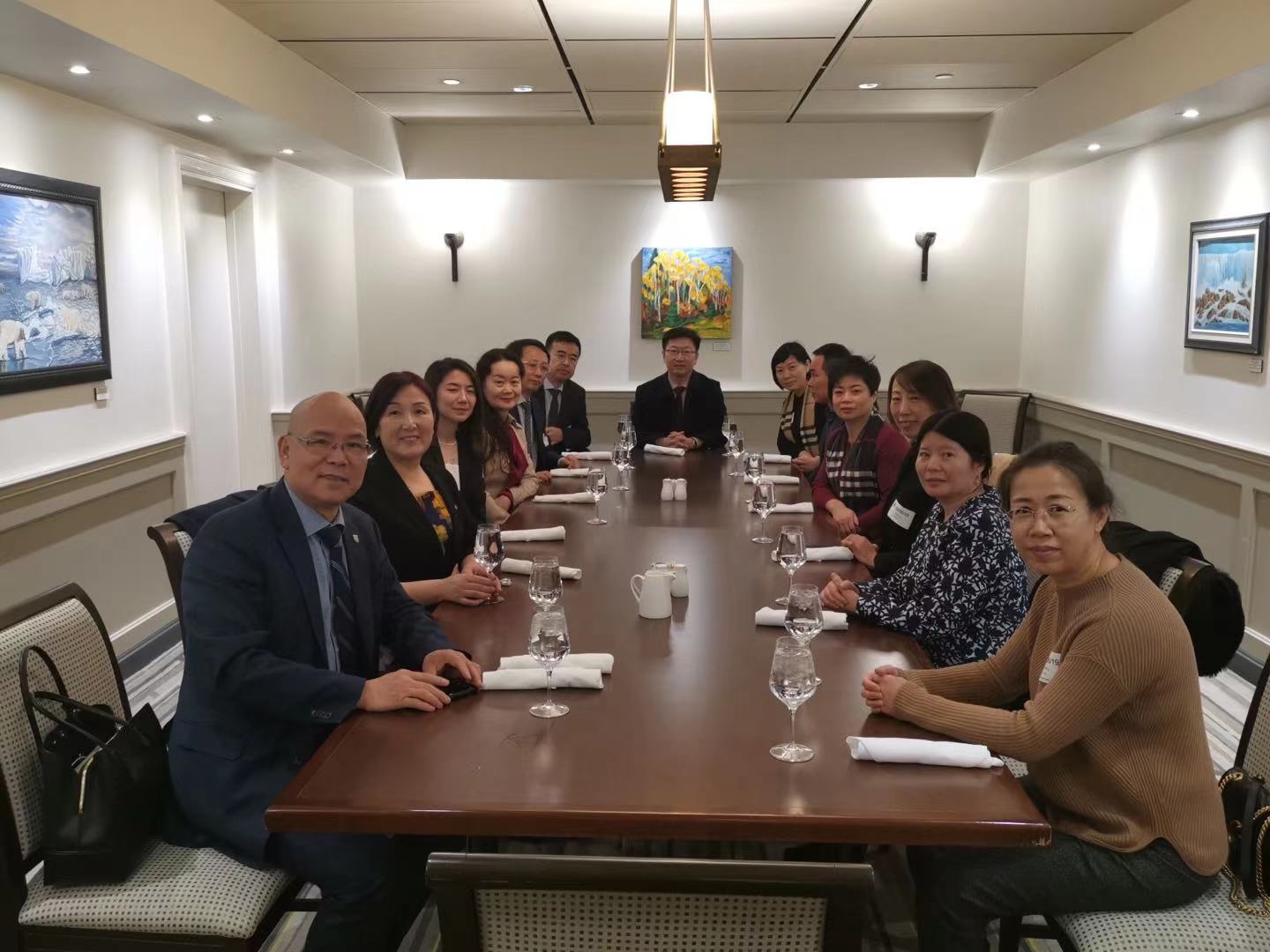
MPP Vincent Ke (first from left) had lunch with members of the Chamber of Commerce
After lunch, Mr. Ke had to attend the legislative meetings and arranged for staff to guide us through the Assembly Buildings. We were accompanied by a young lady wearing a black headscarf.
In the mock assembly hall, a fake metal hammer, called Mace, was placed on the guard's desk, marking the Queen's authorization to legislate parliament. During the parliamentary debate, the parliamentary guard officer brought it to the legislative chamber, with the hammer pointed to the side of the ruling party.
The lady who was accompanying us said that the buildings on the east and west sides were originally constructed according to a symmetrical design. In 1909, a fire destroyed the wooden structure of the west building. The cause was that a worker polished metal tools with fire and forgot to put out the fire when he went out for lunch. Sparks splashed out and caused a fire. When the west wing was rebuilt, Toronto’s new building bill required a masonry structure. The west wing we see now is made of Italian marble.
Seeing the pictures of female members of parliament on the wall, I couldn't help stopping and pay respect to the courage and wisdom of the women. From the text and pictures, I saw that the first female member of Parliament in Ontario was Agnes Campbell Macphail, who participated in politics during 1943-1945 and 1948-1951 respectively. In the question on March 6, the issue of wage inequality between men and women was raised and debated again. Today, the fight for women's rights is still advancing step by step.
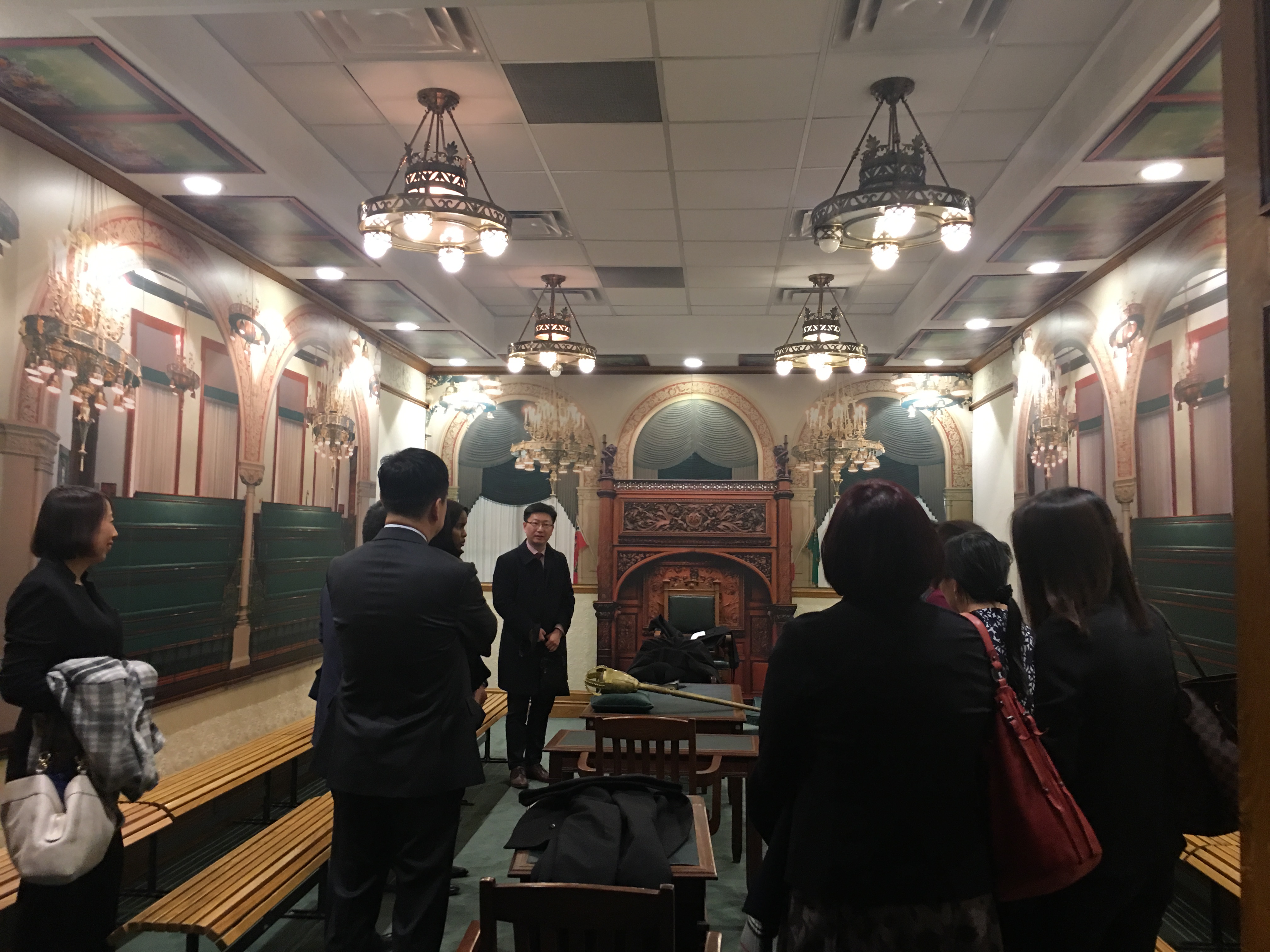
The model of assembly hall
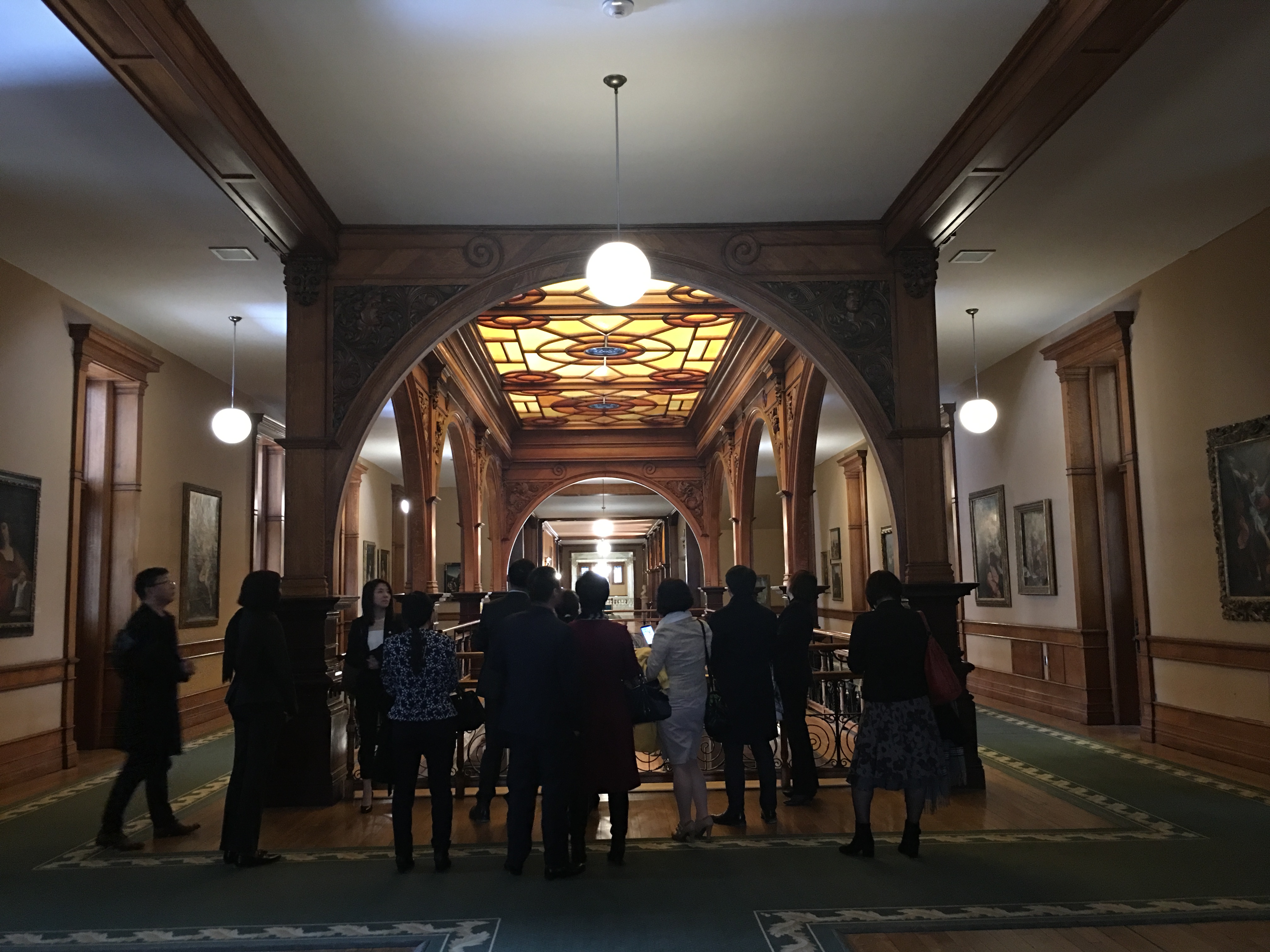
Rebuilt west wing
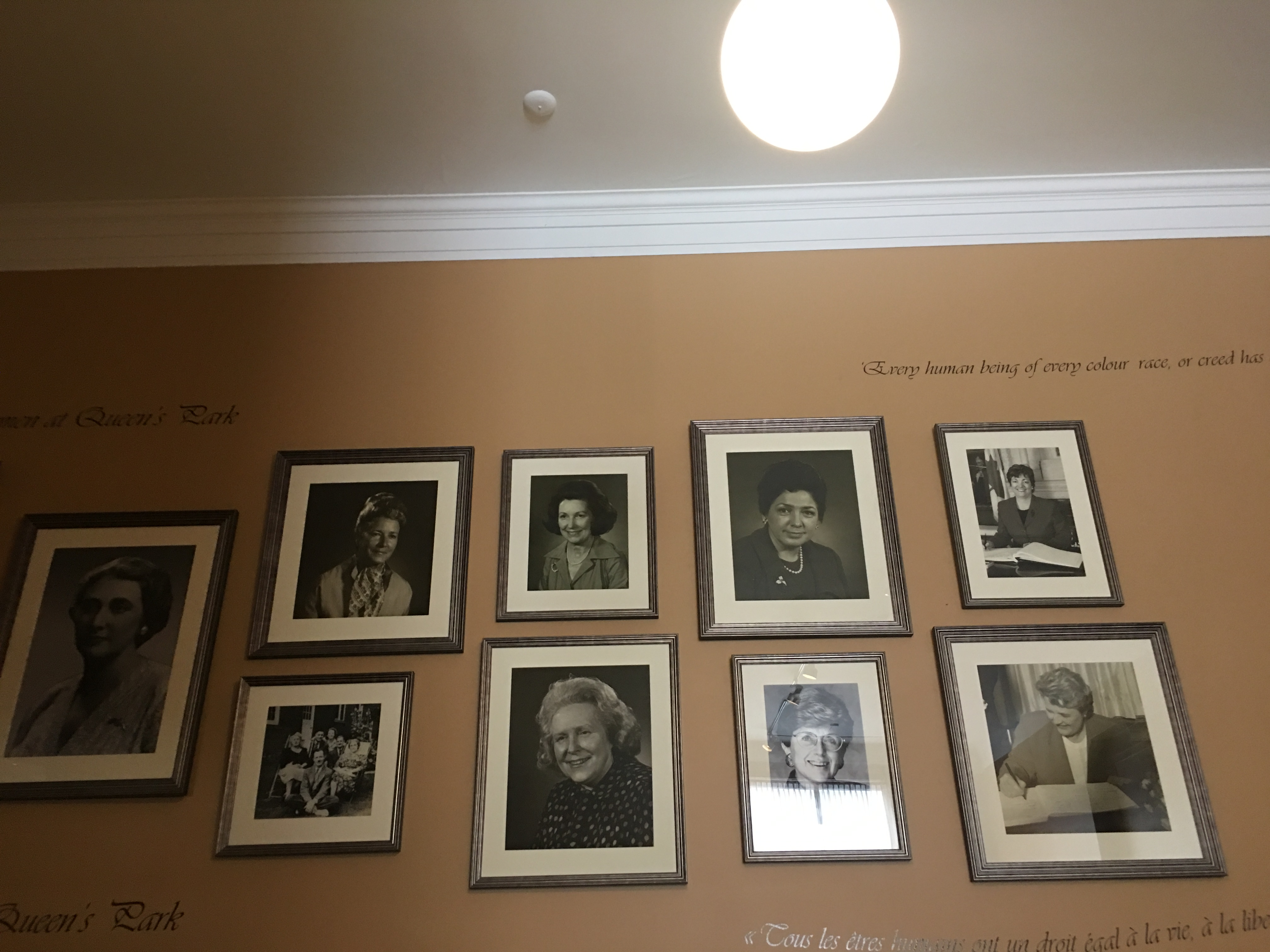
Photo of Female Members of Provincial Parliament of Ontario
After visiting the Legislative Building, the trip has come to an end. Everyone has learned a lot about the legislative process from this visit of the provincial legislative assembly. Politics sounds very far away, but they are actually really close to us, and it's up to everyone to make a difference.
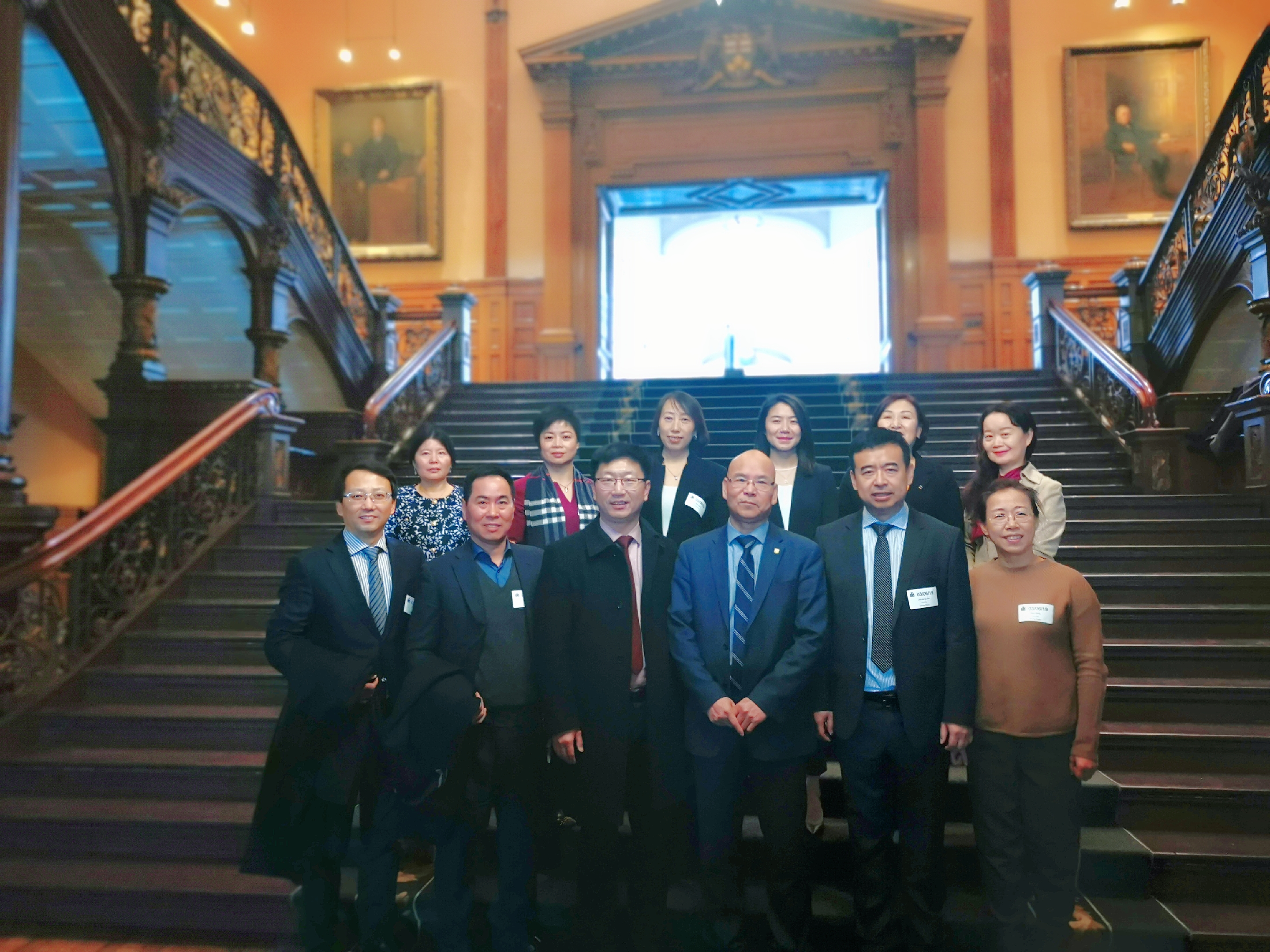
Group photo of MPP Vincent Ke and members of the Chamber of Commerce